Stop Missing Out: Your Essential 2025 Guide to Ethical AI Use

webmaster

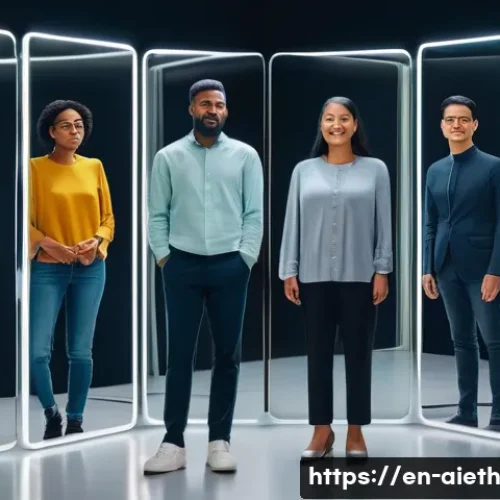
AI 윤리와 AI 사용 가이드 - **Prompt:** A vibrant, futuristic workspace bathed in soft, diffused light, where a diverse group of...

Wow, AI ethics and usage guidelines are definitely hot topics right now, and it’s clear they’re only going to get more important in the coming years. From what I’ve seen across the web, there’s a huge push for both individuals and organizations to understand and implement responsible AI practices.

AI 윤리와 AI 사용 가이드 관련 이미지 1

When I first started delving into AI, I’ll admit, I was mostly focused on the cool tech and what it could *do*. But as I’ve used more and more AI tools in my daily life and for my blog, I’ve personally found myself thinking more deeply about the “shoulds” – not just the “cans.” It’s becoming abundantly clear that as AI weaves itself further into our lives, from personalized recommendations to critical decision-making in healthcare and finance, having clear ethical guideposts isn’t just a nice-to-have; it’s absolutely essential.

We’re talking about everything from preventing biased algorithms in hiring and loan approvals to ensuring data privacy in facial recognition systems and autonomous vehicles.

The latest trends really highlight this shift: there’s a growing emphasis on multi-stakeholder collaboration for AI governance, stricter data privacy measures, and a move towards “ethics by design” where ethical principles are embedded right from the start of AI development.

We’re also seeing a surge in global regulations, like the EU AI Act taking full effect, and countries developing their own frameworks to address local concerns.

It’s a complex, fragmented, but undeniably critical landscape. For us, as users and creators in this AI-driven world, understanding these nuances is key.

It’s about being informed consumers, but also responsible innovators. Let’s dive deeper into what AI ethics and usage guidelines really mean for us, and how we can navigate this evolving technological frontier.

*In today’s rapidly advancing digital landscape, Artificial Intelligence is no longer just a futuristic concept; it’s a pervasive reality, shaping everything from our daily routines to global industries.

While the transformative power of AI offers unprecedented opportunities, it also brings forth a unique set of ethical challenges and calls for clear usage guidelines that truly put people first.

We’re all experiencing this firsthand, whether it’s through the personalized content we consume or the automated systems we interact with every day. It’s a journey where innovation and responsibility must walk hand-in-hand to build a future that is both brilliant and fair for everyone.

Uncover the essential principles of AI ethics and responsible AI usage that are shaping our world.

Navigating the Moral Maze of AI Development

The Human Element in Algorithmic Design

When I first dipped my toes into the world of AI, it was all about the “wow” factor – the incredible things these systems could accomplish. But as I started using more AI tools for everything from content creation to scheduling, a deeper question began to emerge: who’s making the rules here?

It’s not just about what an algorithm *can* do, but what it *should* do, and perhaps more importantly, who decides that “should.” I’ve personally seen how a seemingly neutral algorithm can inadvertently perpetuate biases present in its training data, leading to outcomes that are anything but fair.

Think about recruitment tools that might favor certain demographics simply because the historical data they learned from had those biases. It really hit me that the people behind the code, with their own perspectives and values, are essentially embedding a moral compass into these powerful systems.

This realization has fundamentally shifted how I view AI development – it’s a constant dance between technical prowess and profound ethical consideration.

We’re not just coding; we’re essentially designing the future of interaction, and that carries immense responsibility.

Transparency and Accountability: Peeking Behind the Curtain

I remember trying to figure out why an AI suggested a particular product to me, and it felt like peering into a black box. This lack of clarity, or “explainability,” is a huge ethical concern, especially when AI is used in critical areas like healthcare diagnoses or financial lending.

How can we trust a system if we don’t understand *how* it arrived at its decision? I believe transparency isn’t just a buzzword; it’s a fundamental right.

We, as users, deserve to know the logic behind an AI’s output, and developers have a moral obligation to make their systems as auditable and understandable as possible.

Beyond transparency, there’s accountability. If an AI makes a mistake, who is responsible? Is it the developer, the deployer, or the user?

These aren’t easy questions, and I’ve spent countless hours pondering them. But having clear lines of accountability is vital for fostering public trust and ensuring that when things go wrong, there’s a mechanism for redress.

It’s about building a framework where both the capabilities and the limitations of AI are clear to everyone involved.

Building Trust: The Cornerstone of Ethical AI

Protecting Our Privacy in an AI-Driven World

Let’s be honest, data privacy feels like a constant battle these days, and AI only amplifies those concerns. Every time I interact with an AI, whether it’s my smart speaker or a personalized news feed, I’m sharing a piece of myself.

My personal experience has shown me just how easily our digital footprints can be used in ways we didn’t anticipate. The ethical dilemma here is profound: how do we harness the incredible benefits of AI, which often rely on vast amounts of data, without compromising individual privacy?

It’s not just about anonymizing data; it’s about ensuring that even aggregated data can’t be reverse-engineered to identify individuals. I’ve become incredibly mindful of the permissions I grant apps and services, because once that data is out there, especially in the hands of an AI, its potential uses become exponentially broader.

Robust data governance, strict consent mechanisms, and a commitment to data minimization are absolutely essential to maintain trust. We need to feel secure that our personal information isn’t being exploited or misused by the algorithms that now permeate our lives.

Fairness and Bias: Ensuring AI Works for Everyone

This is one area where my personal journey into AI ethics really opened my eyes. I used to think of algorithms as inherently objective, but that’s far from the truth.

If an AI learns from biased data – and let’s face it, much of the historical data reflecting human decisions is inherently biased – then the AI will simply reflect and even amplify those biases.

I’ve read countless stories, and even seen examples myself, of facial recognition systems that perform poorly on certain skin tones, or AI models used in judicial systems that disproportionately flag certain groups.

It’s truly disheartening to realize that the advanced technology we create can inadvertently perpetuate or even worsen societal inequalities. Ensuring fairness means actively working to identify and mitigate biases at every stage of AI development, from data collection to model deployment.

It requires diverse teams building the AI, and constant auditing to check for unintended discriminatory outcomes. We have a moral imperative to build AI that serves *all* of humanity, not just a privileged few, and that means actively fighting against algorithmic unfairness.

Advertisement

Empowering Users: Your Role in the AI Ecosystem

Understanding Your Rights and Responsibilities

As AI becomes more integrated into our daily lives, it’s not enough to simply be a passive consumer; we need to become informed participants. I’ve found that many people are still a little hazy on what their rights are when interacting with AI systems, or what responsibilities they might even implicitly have.

For instance, do you know if an AI system is making a significant decision about you? Do you have the right to challenge that decision, or even request a human review?

These are questions we should all be asking. It’s also about our responsibility to use AI tools ethically ourselves. Just because an AI can generate content or automate tasks doesn’t mean we should blindly trust its output or use it for malicious purposes.

I’ve personally made it a point to always critically evaluate AI-generated text or images, and to understand the limitations of the tools I use. This active engagement empowers us, moving us from mere recipients of AI’s influence to conscious shapers of its impact.

Cultivating AI Literacy: Knowledge is Power

Honestly, one of the biggest hurdles I see is a general lack of AI literacy. It’s not about becoming an AI engineer, but about understanding the basic concepts, capabilities, and limitations of AI.

Just like we learn about financial literacy or digital literacy, AI literacy is becoming equally crucial. I’ve noticed that when people grasp how AI works at a fundamental level – understanding concepts like machine learning, data, and algorithms – they feel much more confident and less intimidated.

It allows them to ask better questions, identify potential ethical concerns, and make more informed choices about which AI tools to adopt and how to use them.

For me, sharing knowledge about AI through my blog isn’t just about cool tech tips; it’s about empowering my readers to navigate this new landscape with confidence.

The more we understand, the better equipped we are to advocate for ethical AI and demand responsible practices from companies and governments alike.

The Global Ripple Effect: Harmonizing AI Regulations

From Local Directives to International Cooperation

It’s fascinating to watch how different parts of the world are grappling with AI ethics and regulation. What started as individual countries or regions developing their own guidelines is now evolving into a complex web of international discussions.

I’ve observed firsthand that what might be acceptable in one culture regarding data privacy, for instance, could be a serious ethical breach in another.

This global disparity presents a huge challenge, especially for multinational companies developing AI. We’re seeing groundbreaking initiatives like the EU AI Act, which aims to create a comprehensive regulatory framework, setting a high bar for responsible AI development and deployment.

But it’s not just about one region’s rules; the truly exciting work is happening in international forums where experts from diverse backgrounds are trying to establish common ground.

It’s a massive undertaking, but absolutely necessary if we want to ensure AI benefits everyone, everywhere, without creating new digital divides or ethical loopholes.

Addressing the Digital Divide in AI Access and Benefits

This is a point that weighs heavily on me when I think about the future of AI. While advanced nations are debating the finer points of AI ethics, many communities around the globe are still struggling with basic access to technology, let alone the sophisticated benefits of AI.

AI 윤리와 AI 사용 가이드 관련 이미지 2

There’s a real risk that AI could exacerbate existing inequalities, creating an even wider digital divide. I’ve often thought about how AI-powered educational tools or healthcare diagnostics could revolutionize lives in underserved areas, but only if they’re accessible and culturally appropriate.

Ethical AI isn’t just about preventing harm; it’s also about actively promoting equitable access and ensuring that the transformative power of AI is distributed fairly.

This means investing in infrastructure, fostering local talent, and developing AI solutions that are specifically designed to address the unique challenges faced by diverse populations.

It’s a call to action for all of us to ensure AI uplift everyone, not just those already at the technological forefront.

Advertisement

Practical Steps for Ethical AI Adoption

Implementing “Ethics by Design” in Development

For me, one of the most exciting shifts in the AI space is the growing emphasis on “ethics by design.” It’s a concept I wholeheartedly champion because it means embedding ethical considerations right from the very beginning of an AI project, not as an afterthought.

I’ve seen too many instances where ethical issues only surface late in the development cycle, leading to costly reworks or even abandoning a project altogether.

When you adopt an ethics-by-design approach, you’re constantly asking questions: How will this AI impact different user groups? What are the potential unintended consequences?

How can we build in mechanisms for transparency and human oversight from day one? This proactive mindset is a game-changer. It means diversifying development teams to bring varied perspectives to the table, conducting regular ethical impact assessments, and prioritizing values like fairness, privacy, and accountability alongside technical performance.

It’s a more challenging way to build AI, no doubt, but one that ultimately leads to more robust, trustworthy, and beneficial systems for everyone.

Regular Audits and Continuous Improvement

Building an AI ethically isn’t a one-time task; it’s an ongoing commitment. My personal experience with various software and digital tools has taught me that technology evolves, and so do its potential impacts.

What might seem ethically sound today could raise concerns tomorrow as circumstances change or new insights emerge. That’s why I’m a firm believer in regular ethical audits and a culture of continuous improvement for AI systems.

It’s not enough to deploy an AI and assume it will operate perfectly and fairly forever. We need mechanisms to monitor its performance, identify any emergent biases or unintended harms, and be prepared to make adjustments.

This involves both technical audits to check for algorithmic fairness and data integrity, as well as human oversight to evaluate the system’s broader societal impact.

It’s a dynamic process, much like quality control in any industry, but with the added complexity of ethical considerations. By committing to ongoing evaluation, we can ensure AI remains a force for good and adapts responsibly to our ever-changing world.

Looking Ahead: Shaping a Human-Centric AI Future

The Indispensable Role of Human Oversight

Even as AI systems grow incredibly sophisticated, one principle I’ve come to deeply appreciate is the absolutely indispensable role of human oversight.

I’ve personally seen scenarios where AI performs brilliantly in controlled environments but struggles with the nuances and complexities of real-world situations, especially those involving human emotions or unpredictable variables.

We’re simply not at a point where we can completely hand over critical decisions to algorithms. Humans bring intuition, empathy, and contextual understanding that AI currently lacks.

Whether it’s in healthcare, legal proceedings, or even customer service, having a human in the loop provides a crucial safety net and ensures that ethical boundaries are respected.

This isn’t about limiting AI’s potential, but rather about leveraging its strengths while safeguarding against its weaknesses. It’s about designing systems where AI augments human capabilities, rather than completely replacing them, creating a more robust and trustworthy outcome.

Fostering Cross-Disciplinary Collaboration

Honestly, the more I delve into AI ethics, the clearer it becomes that this isn’t a problem that computer scientists can solve alone. It requires a truly collaborative effort across diverse fields.

I’m talking about ethicists, sociologists, lawyers, policymakers, designers, and even artists all coming together with AI developers. Each discipline brings a unique perspective that is vital for understanding the multifaceted impacts of AI.

For example, a sociologist might highlight potential societal ripple effects that an engineer hadn’t considered, while an ethicist can guide discussions on moral dilemmas.

My own journey as a blogger has shown me the power of connecting disparate ideas, and this principle holds even truer for AI ethics. By breaking down silos and fostering open dialogue between these varied experts, we can develop more holistic, robust, and truly human-centric AI solutions.

It’s an exciting, albeit challenging, path forward, but one that I believe is absolutely necessary for building an AI future we can all be proud of.

Advertisement

Summary of Key Pillars for Responsible AI

Guiding Principles for a Better Tomorrow

I’ve learned that navigating the world of AI isn’t just about speed and innovation; it’s profoundly about responsibility. The following table summarizes the key areas we’ve discussed, which, from my experience, are absolutely critical for building AI that truly serves humanity.

It’s a simple reminder of the commitment needed from everyone involved.

Pillar of Responsible AI Core Concept Why It Matters (My Take)
Fairness & Non-Discrimination AI should treat all individuals and groups equitably, avoiding biased outcomes. It’s heartbreaking to see tech perpetuate old biases. We *must* build AI that champions equality for everyone.
Transparency & Explainability AI systems should operate predictably, and their decisions should be understandable. If I can’t understand *why* an AI made a choice, how can I trust it? Clarity builds confidence.
Privacy & Data Governance Personal data used by AI must be protected, with clear consent and secure handling. Our digital footprint is precious. AI needs to respect our personal space and keep our data safe.
Accountability & Responsibility Clear mechanisms for determining who is responsible for AI’s actions and impacts. When things go wrong, we need to know who’s stepping up. No black boxes for blame!
Human Oversight & Control Humans should maintain meaningful control over AI systems, especially in critical applications. AI is amazing, but it’s a tool. We, as humans, are the ultimate decision-makers and ethical guardians.
Safety & Robustness AI systems should be reliable, secure, and perform consistently as intended. Just like any other technology, AI needs to be safe and dependable. We can’t afford failures in critical areas.

My Personal Hope for AI’s Future

Looking at all these principles, it’s clear that the path ahead for AI is complex, but it’s also incredibly promising. My hope, as someone who spends a lot of time in this digital space, is that we continue to prioritize people.

It’s not just about pushing the boundaries of what AI can do, but about ensuring that every step forward is taken with human well-being, dignity, and equity at its heart.

We’re at a pivotal moment, and our collective choices now will define the kind of world AI helps us build. Let’s make it a world that’s brilliant, fair, and truly human-centric.

Wrapping Things Up

Whew, we’ve covered a lot of ground today, haven’t we? Diving into the ethics of AI can feel like navigating a complex maze, but what always brings me back to solid ground is remembering that at its core, AI is a reflection of us—our data, our values, and our intentions. It’s not just some abstract technology; it’s a powerful force shaping our everyday lives, and that means we all have a part to play in ensuring it builds a better future. My hope is that by sparking these conversations, we can empower each other to demand more, question more, and ultimately, create an AI ecosystem that genuinely uplifts humanity.

Advertisement

Handy Tips to Keep in Mind

1. Always review the privacy settings on your smart devices and AI-powered apps. It’s easy to click “agree” without thinking, but taking a few extra moments to understand what data you’re sharing and how it’s being used can make a huge difference in protecting your digital footprint. Your data is precious, so be mindful of who you hand it over to; once it’s out there, it’s often out of your direct control.

2. Don’t be afraid to ask questions about the AI tools you encounter daily. If an AI suggests something or makes a decision that impacts you, try to find out the “why” behind it. A healthy dose of curiosity and critical thinking is your best defense against blind trust and ensures you stay empowered in an AI-driven world. After all, if the creators can’t explain it, how can we truly trust it?

3. For my fellow creators and developers, remember that diversity isn’t just a buzzword – it’s an ethical imperative. Building AI models with diverse teams helps to catch biases early and ensure that the solutions you’re creating genuinely serve a broader, more representative population. Different perspectives lead to better, fairer outcomes, avoiding those embarrassing and often harmful missteps we’ve seen in the past.

4. Stay informed about global AI regulations and discussions. What’s happening with data privacy laws in Europe or ethical guidelines in the US might directly impact the tools you use or even how you develop them. Being aware of the evolving legal and ethical landscape allows you to navigate the AI space more responsibly and effectively. It’s a fast-moving target, so keeping up-to-date is key to staying ahead and compliant.

5. Advocate for responsible AI! Your voice matters. Whether it’s through engaging with discussions online, supporting companies with strong ethical AI policies, or simply educating your friends and family, every little bit helps. We’re all in this together, and collectively, we can push for a future where AI serves humanity’s best interests, creating a safer, more equitable digital environment for everyone.

Key Points to Remember

Ultimately, our journey through the moral maze of AI development boils down to a few core, non-negotiable principles that I truly believe will define the success and acceptance of this incredible technology. We must prioritize fairness above all else, actively working to eliminate biases in every algorithm and dataset, ensuring AI treats everyone equitably. Transparency isn’t just a nice-to-have; it’s essential for building user trust, allowing us to understand how and why AI makes its decisions. Safeguarding our privacy and ensuring robust data governance are paramount, giving individuals control over their digital identities and preventing misuse. Crucially, accountability must be crystal clear – when AI impacts lives, we need to know who is responsible and how redress can be sought. And finally, never underestimate the power of human oversight; AI is a powerful tool to augment our capabilities, not replace our judgment or moral compass. By keeping these pillars firmly in place, we can ensure that AI truly becomes a force for good, shaping a future that is not just innovative, but also equitable, trustworthy, and deeply human-centric, creating technology we can all be proud of.

Frequently Asked Questions (FAQ) 📖

Q: Why has

A: I ethics suddenly become such a hot topic, and what does it really mean for us, the everyday users and creators? A1: You know, it’s funny how fast things change!
When I first started playing around with AI tools for my blog and just for fun, I was mostly captivated by the sheer power and potential – all the cool things AI could do.
But as AI has become less of a futuristic concept and more of a deeply integrated part of our daily lives, from how we shop to how we consume content, the conversation has totally shifted.
Suddenly, it’s not just about what AI can do, but what it should do, and perhaps more importantly, how it should be used. For us, this means grappling with some pretty big questions: how do we ensure AI is fair and doesn’t discriminate, especially in critical areas like job applications or loan approvals?
How do we protect our privacy when AI systems are constantly collecting and analyzing data? And how do we hold AI creators accountable when things go wrong?
It’s truly about making sure this incredible technology serves humanity responsibly, rather than inadvertently creating new problems. I’ve personally found myself thinking so much more about the “shoulds” lately, and it’s a conversation we all need to be a part of.

Q: With

A: I becoming so pervasive, what are some practical steps or mindsets we can adopt to ensure we’re using AI responsibly and ethically in our own lives? A2: That’s a fantastic question, and honestly, one I ask myself all the time!
It’s easy to feel a bit overwhelmed by the sheer scale of AI, but we absolutely have a role to play. First off, I’d say cultivate a healthy dose of critical thinking.
Just because an AI generates something, whether it’s an article, an image, or even a recommendation, doesn’t automatically make it 100% accurate or unbiased.
Always ask yourself, “Where did this information come from? Could there be any hidden biases?” Secondly, be mindful of your data. When you sign up for a new AI service, take a moment to understand what data they’re collecting and how they plan to use it.
Don’t just blindly click “agree”! For us creators, it means being transparent about when we’re using AI to assist us, and always double-checking the facts.
It’s about being informed consumers and conscientious creators, understanding that our choices, even small ones, contribute to the larger ethical landscape of AI.
For me, it boils down to treating AI as a powerful assistant, not a replacement for my own judgment and ethics.

Q: What are the big trends or principles that are currently guiding the development of ethical

A: I, and how might these impact the future of technology? A3: From what I’ve been seeing across the tech world and in discussions with fellow bloggers, there are definitely some clear trends emerging that are shaping the future of ethical AI.
One of the biggest is “ethics by design.” This means that ethical considerations aren’t just an afterthought tacked on at the end of AI development; they’re baked into the very foundation of the system from day one.
Developers are consciously thinking about fairness, transparency, and accountability during the design phase. Another huge one is multi-stakeholder collaboration.
It’s not just tech companies dictating the rules; governments, academics, civil society organizations, and even users like us are all getting a seat at the table to help shape AI governance.
We’re also seeing a massive push for stricter data privacy measures globally, with regulations like the EU AI Act setting a high bar. Ultimately, these trends are pushing AI towards being more explainable, auditable, and truly aligned with human values.
I believe this move towards a more human-centered approach to AI is critical. It suggests a future where AI isn’t just technologically advanced, but also ethically sound and genuinely beneficial for everyone, which, let’s be honest, is what we all truly hope for.

Advertisement